American Lobster Design: A Professional Review
First Impressions for Commercial Branding
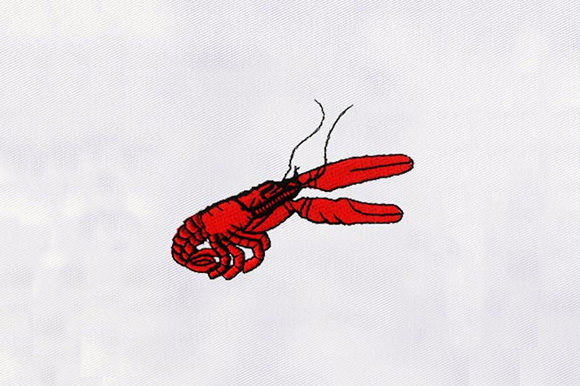
As an embroidery designer evaluating assets for small business merchandise, my first impression of the American Lobster Design is that it carries significant visual weight and thematic clarity. In the world of custom apparel and branded goods, specificity sells. While categorized broadly under Fish, this design leans heavily into maritime heritage, coastal dining, and nautical lifestyle branding. It does not feel like a generic cartoon; rather, it presents as a potential cornerstone for brand identity in niche markets.
For a professional digitizer or shop owner, the immediate question is versatility. Does this machine embroidery design translate well from a digital screen to a tangible product? The American Lobster Design appears to balance detail with bold outlines, which is crucial for commercial viability. It strikes a tone that is both rustic and premium, making it suitable for high-end seafood restaurants, coastal boutiques, fishing charters, and artisanal food brands. It avoids looking overly playful, allowing it to maintain professionalism on staff uniforms while still being engaging enough for retail merchandise.
Real-World Applications for Small Business Merch
When integrating the American Lobster Design into a production workflow, I see distinct opportunities across various small business merch categories. The true value of a digital embroidery file lies in its adaptability, and this motif offers several strong use cases.
- Hospitality Uniforms and Aprons: For seafood shacks, lobster rolls stands, or fine dining establishments, this design serves as an excellent left-chest logo or back-of-apron accent. Apron embroidery requires durability, and the solid nature of this design suggests it can withstand industrial laundering if hooped and stabilized correctly.
- Retail and Boutique Goods: Coastal gift shops and handmade brands can utilize this for tote bag design or canvas market bags. The lobster motif acts as a geographic marker, instantly signaling "coastal" to tourists and locals alike, thereby increasing perceived product value.
- Patches and Caps: As an embroidered patch, the American Lobster Design has strong potential for outdoor gear, fishing tournaments, or boat crew uniforms. Cap embroidery is notoriously difficult due to curvature, but a centered, balanced motif like this often registers better on structured caps than wide, sprawling text.
- Event Merchandise: For seafood festivals, regattas, or community fundraisers, this design provides instant thematic recognition. It works effectively on limited-run items where quick brand association is necessary.
Technical Considerations and Production Risks
Despite its aesthetic appeal, any experienced embroiderer knows that a pretty picture does not always equal a clean stitch-out. When reviewing the American Lobster Design for commercial production, specific technical constraints must be respected to ensure the finished product meets quality standards.
Stitch Density and Fabric Texture
Lobster designs often involve complex shading and textured fills to mimic the shell. High stitch density is common in these areas. If you are planning to run this on lightweight performance wear or thin cotton tees, you risk puckering or fabric distortion. I strongly advise testing the design on the exact fabric texture intended for production. For heavier items like denim aprons or canvas totes, the density is likely appropriate, but for lighter garments, you may need to edit the file to reduce fill stitches or add additional underlay.
Sizing and Detail Retention
One critical caution involves resizing. While the provided embroidery file formats (including PES, DST, JEF, and VP3) allow for manipulation, shrinking the American Lobster Design too far can cause details to merge. Claws, antennae, and leg segments are prone to becoming indistinguishable blobs at small patch sizes. Before committing to a bulk order of 2-inch patches, verify that the internal spacing remains open. If the design relies on tiny lettering or intricate line work within the lobster body, it may require simplification for miniature applications.
Curved Surfaces and Hoop Size
For cap embroidery, confirm your hoop size limitations before purchasing or stitching. The aspect ratio of a lobster is often wider or taller than standard cap frames allow. Furthermore, curved surfaces distort registration. Test the design on a scrap cap first to ensure the outline aligns perfectly with the fill. Misregistration on a dark navy cap with white outlining is immediately visible and unprofessional.
Strategic Impact on Brand Value
Beyond the needle and thread, the American Lobster Design functions as a strategic asset for handmade product lines and established businesses. Visual consistency builds customer trust. When a café uses this same high-quality motif on their signage, staff shirts, and takeout packaging, it reinforces a cohesive narrative.
For Etsy sellers and independent creators, using a specialized design like this elevates the perceived craftsmanship of the item. Generic clip art feels cheap; a dedicated machine embroidery design signals intention. However, this only holds true if the execution is flawless. Poor tension, bobbin show-through, or mismatched thread colors will negate the design's inherent quality. The design supports a premium price point only when the production quality matches the visual promise.
Designer Notes for Successful Implementation
To maximize the ROI on the American Lobster Design, follow these practical steps before full-scale production:
- Verify File Compatibility: This package includes extensive formats: 10O, ART, CND, DSB, DST, DSZ, EXP, HUS, JEF, PES, TAP, VIP, VP3, and XXX. Confirm your machine reads the specific version you intend to use. Do not assume auto-conversion preserves all stitch attributes perfectly.
- Create a Printable Mockup: Before stitching, generate a printable mockup to scale. Place it physically on the garment or item. This helps visualize placement and size relative to the actual product, preventing costly positioning errors.
- Test in Black and White: Run a grayscale or single-color test stitch-out first. This reveals the underlying structure and density without the distraction of color. If the design looks muddy or flat in one color, it needs editing regardless of how many thread colors are used in the final version.
- Stabilizer Selection is Key: Match your stabilizer to the end use. Use cut-away for stretchy apparel to prevent distortion over time. Use tear-away only for stable, non-stretch fabrics like towels or heavy canvas. For patches, use a dedicated patch material or heavy tear-away to ensure clean edges.
- Check Commercial Licensing: Crucially, review the license terms associated with these design assets. Ensure you have the right to use the American Lobster Design on items sold for profit. Never assume a file purchase includes unlimited commercial reproduction rights.
- Contrast Testing: Test the design on both light and dark backgrounds. Some digitizing relies on fabric showing through for shading. If you switch from a white apron to a black cap, you may need to add a white underlay base to make the colors pop and prevent the dark fabric from dulling the design.
The American Lobster Design represents a strong opportunity for businesses in the maritime, culinary, and coastal lifestyle sectors. By approaching it with technical diligence and strategic intent, you can transform a simple embroidery file into a powerful tool for brand recognition and customer engagement. Always prioritize test runs and quality control to ensure your commercial embroidery projects reflect the excellence your business stands for.